














The Complete Guide to Chemical Nickel Plating: Principles, Processes, and Applications
Excerpt:
Electroless nickel plating is an autocatalytic deposition technique that does not require an external power source. It is widely used in the aerospace, automotive, and electronics industries due to its excellent uniformity, high hardness, and outstanding corrosion resistance. This article provides a comprehensive analysis of electroless nickel plating technology, covering everything from its principles to practical applications.
Article Catalog[Hidden]
- I. What Is Chemical Nickel Plating?
- II. Principles and Chemical Reactions of Chemical Nickel Plating
- III. Composition of the Chemical Nickel Plating Solution
- IV. Chemical Nickel Plating Process Flow
- V. Key Advantages of Chemical Nickel Plating
- VI. Industrial Applications of Chemical Nickel Plating
- VII. Chemical Nickel Plating on Aluminum Alloys (Key Topic)
- VIII. Coating Properties and Heat Treatment
- IX. Frequently Asked Questions (FAQ)
I. What Is Chemical Nickel Plating?
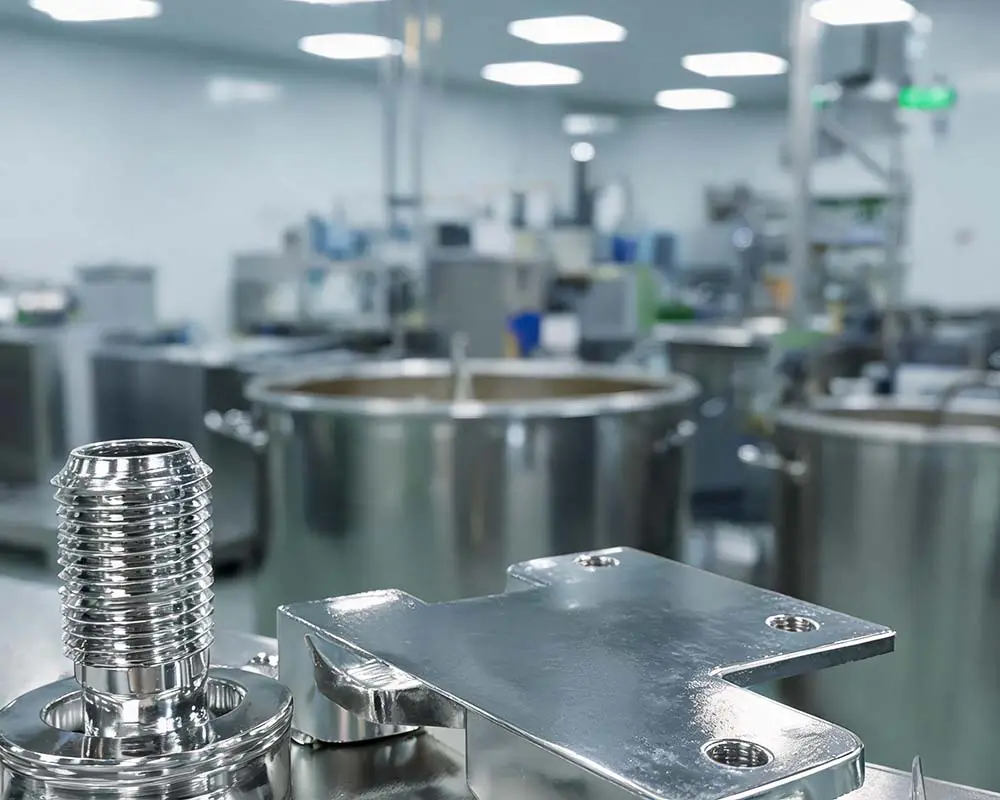
Chemical Nickel Plating (Electroless Nickel Plating), also known asAutocatalytic Nickel Plating或No nickel plating...refers to a method in which, without using an external power source, nickel ions in the plating solution are deposited onto the surface of the workpiece to form a coating through a controlled redox reaction catalyzed by a metal.
Unlike traditional electroplating, electroless nickel plating does not require an external current, so the coating thickness can be extremely uniform and is not affected by the shape of the workpiece or the distribution of the current. This makes it ideal for treatingComplex shapes, deep blind holes, and high-precision partsIdeal for.
Key Points:Chemical nickel plating is an autocatalytic process—once the surface of the workpiece is covered with a nickel layer, the nickel layer itself continues to catalyze redox reactions, causing nickel ions to continue depositing, thereby enabling the formation of coatings of any thickness.
It is now possible to produce coatings of various metals or alloys—including nickel, copper, cobalt, palladium, platinum, gold, silver, and tin—using the electroless plating process. Among these,Nickel-Phosphorus (Ni-P) Electroless PlatingThis is the most widely used type in industrial applications. Depending on phosphorus content, it can be classified into low-phosphorus (1–41 TP3T), medium-phosphorus (5–91 TP3T), and high-phosphorus (10–141 TP3T) coatings.
II. Principles and Chemical Reactions of Chemical Nickel Plating
The basic principle of electroless nickel plating isRedox Reactions: Using a strong reducing agent in a solution containing nickel ions, the nickel ions are reduced to metallic nickel, which is deposited on the surfaces of various materials to form a dense coating.
Taking an acidic electroless nickel plating system using sodium hypophosphite (NaH?PO?) as the reducing agent as an example, the overall reaction equation is:
Core Reaction Equations for Chemical Nickel Plating
3NaH?PO? + 3H?O + NiSO? → 3NaH?PO? + H?SO? + 2H? + Ni
(Overall reaction in an acidic system)
In a basic environment, the reaction equation is different:
Reaction Equations in Alkaline Systems
2H?PO?? + Ni2? + 2H?O → 2H?PO?? + H? + 2H? + Ni
The simplified ionic reaction is:
Ni2? + H?PO?? + H?O → H?PO?? + Ni + 2H?
In the electroless nickel plating process, the hypophosphite ion (H?PO??) acts as a reducing agent, reducing nickel ions (Ni2?) to metallic nickel (Ni), while itself being oxidized to hypophosphite (H?PO??). Hydrogen gas and hydrogen ions are also produced during the reaction, so a pH buffer is required to maintain the stability of the plating bath.
III. Composition of the Chemical Nickel Plating Solution
A chemical nickel plating solution is a complex multicomponent system, and the proper ratio of its components is critical to the quality of the deposit and the stability of the plating bath. Typical compositions include:
| Components | corresponds English -ity, -ism, -ization | Common Substances |
|---|---|---|
| Metal salts | Provide a source of nickel ions | Nickel sulfate (NiSO?), nickel chloride (NiCl?) |
| Reducing Agent | Reduce nickel ions to metallic nickel | Sodium hypophosphite (NaH?PO?), sodium borohydride |
| Complexing agent | Prevent nickel ion precipitation and control the deposition rate | Lactic acid, acetic acid, malic acid, succinic acid |
| pH buffer | Maintain the pH of the plating bath | Sodium acetate, boric acid, ammonium chloride |
| Stabilizer | Preventing Self-Decomposition of the Plating Bath | Sodium pyrophosphate, sodium citrate |
| Wetting Agent | Reduce surface tension and minimize pinholes | Surfactants |
| rinse agent | Improving the Brightness of the Coating | Organic sulfides, etc. |
The Importance of Stabilizers
Chemical nickel plating solutions often contain colloidal particles and solid particles, which can act as catalytic sites and accelerate the self-decomposition of the plating solution. Therefore, it is necessary to addTrace StabilizersTo suppress nickel deposition at non-catalytic sites, prevent spontaneous decomposition of the plating bath, and extend the bath’s service life.
IV. Chemical Nickel Plating Process Flow
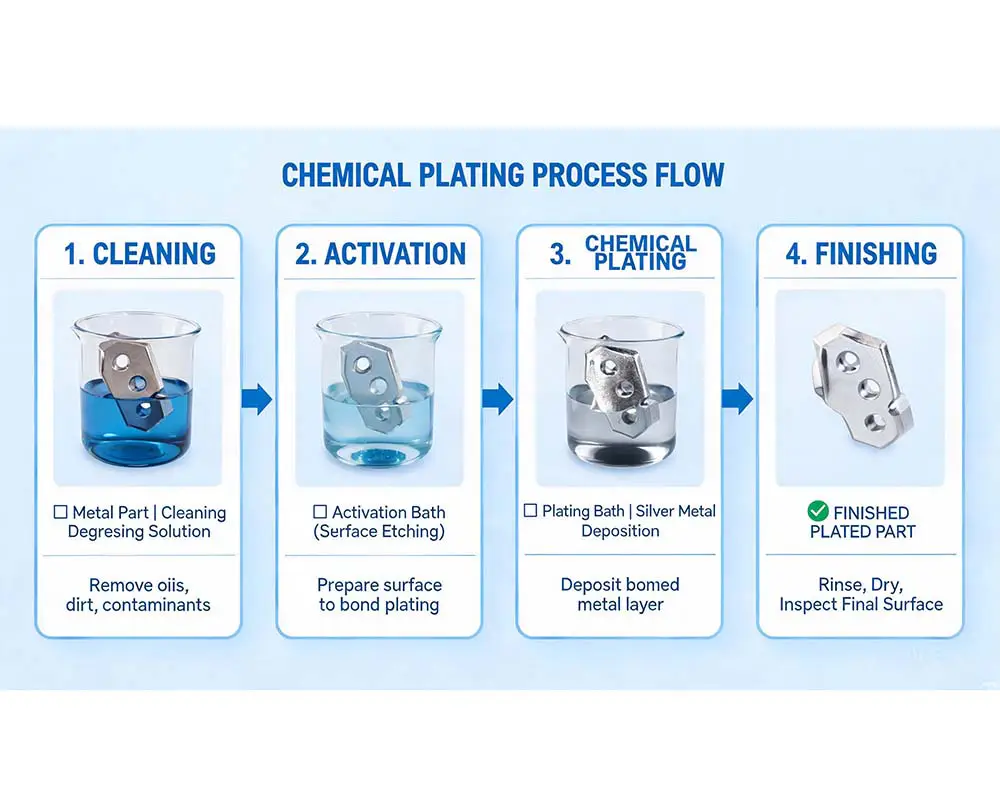
A standard electroless nickel plating process typically includes the following steps:
- Substrate Pretreatment?— Select the appropriate degreasing and rust removal methods based on the type of substrate (steam degreasing, alkaline degreasing, water jet cleaning, etc.)
- Activation Treatment?— Chemically activate the substrate surface to impart catalytic activity, preparing it for coating deposition
- Electrolytic Nickel Plating?— Immerse the activated workpiece in a chemical nickel plating solution for deposition
- Washable?— After plating, rinse thoroughly with running water to remove any residual plating solution.
- reprocess?— Heat treatment (to increase hardness) or sealing treatment may be performed as needed
- Inspection?— Testing parameters such as coating thickness, hardness, adhesion, and corrosion resistance
Key Process Points:Pre-treatment is a key factor in the success or failure of electroless nickel plating. The workpiece surface must be thoroughly cleaned and activated; any oil, oxide film, or impurities will result in reduced adhesion of the plating or missed areas.
V. Key Advantages of Chemical Nickel Plating
Chemical nickel plating offers the following significant advantages over traditional electroplating:
| dominance | instructions |
|---|---|
| Thickness Uniformity | The coating thickness is extremely uniform and is not limited by the shape of the workpiece; consistent coatings can be achieved even in complex areas such as deep blind holes, grooves, and internal cavities. |
| high stiffness | Hardness in the as-plated state is 500–600 HV; after heat treatment, it can reach 900–1100 HV, approaching that of a hard chrome plating. |
| Excellent wear resistance | Nickel-phosphorus alloy coatings have self-lubricating properties and outstanding wear resistance. |
| Excellent corrosion resistance | Performs exceptionally well in many acids, alkalis, salts, ammonia, and seawater, and offers better corrosion resistance than stainless steel |
| High surface finish | The surface is bright after plating and requires no further machining or polishing; it is ready for immediate installation. |
| No distortion | The processing temperature is moderate, and there are no shape restrictions on components, making it particularly suitable for precision parts. |
| Good weldability | Electrolytic nickel plating is easy to braze and is suitable for the subsequent assembly of electronic components. |
VI. Industrial Applications of Chemical Nickel Plating
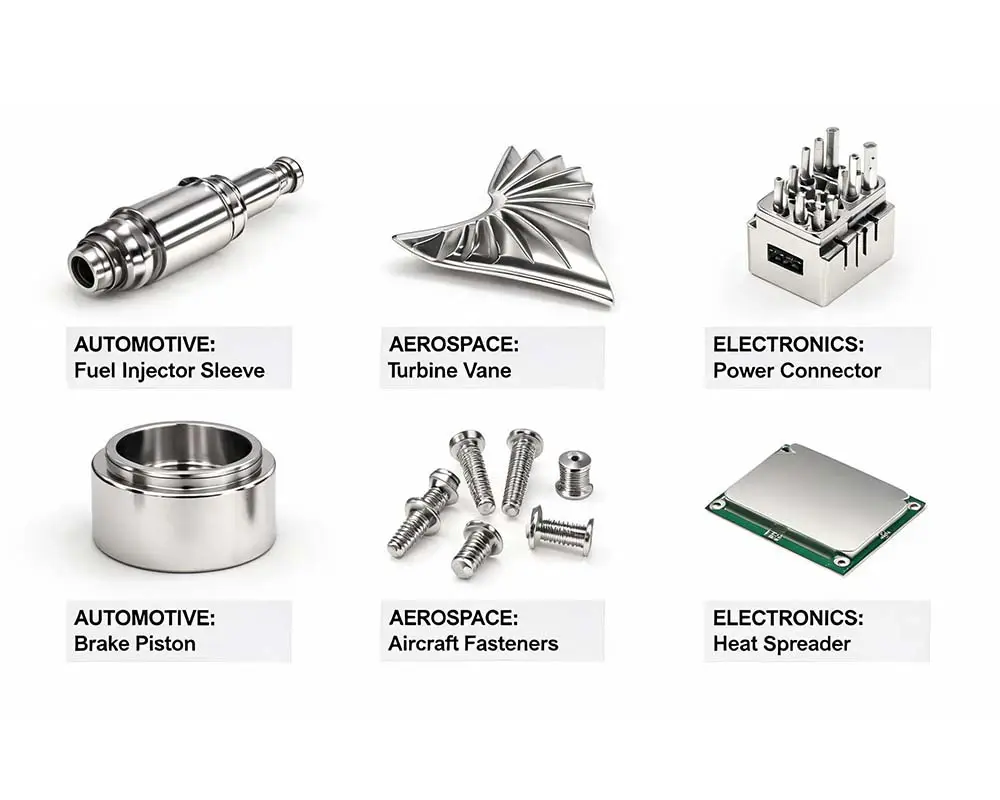
Thanks to its excellent overall performance, electroless nickel plating is widely used in the following fields:
1. Aerospace
Aircraft engine components, landing gear assemblies, hydraulic system parts, and other components rely on the uniformity and corrosion resistance of electroless nickel plating to ensure the reliability of critical components.
2. Automobile Manufacturing
Chemical nickel plating provides wear and corrosion resistance for engine pistons, cylinder liners, fuel injection systems, brake system components, and more.
3. Petrochemicals
For equipment such as valves, pump housings, pipes, and heat exchangers, a chemical nickel plating layer can effectively resist chemical corrosion and extend the service life of the equipment.
4. Electronics Industry
For PCBs, connectors, semiconductor packages, and other components, electroless nickel plating provides a solderable surface and electromagnetic shielding.
5. Mechanical Manufacturing
For molds, gears, bearings, precision mechanical parts, and other components, electroless nickel plating enhances wear resistance and release properties.
6. Food and Healthcare
Food processing equipment, medical devices, and other products rely on the non-toxic and corrosion-resistant properties of electroless nickel plating to ensure hygiene and safety.
VII. Chemical Nickel Plating on Aluminum Alloys (Key Topic)
Aluminum alloys are among the most commonly used lightweight structural materials, but they have low surface hardness and poor wear and corrosion resistance. Electrolytic nickel plating can significantly improve the surface properties of aluminum alloys and expand their range of applications.
Challenges in Chemical Nickel Plating on Aluminum Alloys
Aluminum is a reactive metal with a very negative standard electrode potential (-1.66 V). In a chemical nickel plating solution, it readily undergoes a displacement reaction with nickel ions, which have a more positive potential, resulting in the formation of a porous displacement layer. Furthermore, a dense oxide film forms very easily on the surface of aluminum, and this oxide film severely affects the adhesion between the plating layer and the substrate.
Key Technical Challenges:The pretreatment for electroless nickel plating on aluminum alloys is the most critical step in the entire process, as it directly determines the bond strength between the plating layer and the aluminum substrate.
Pre-treatment Process for Hot-Dip Galvanizing
The most common pretreatment method for chemical nickel plating on aluminum alloys isSecondary Zinc Plating Process. The purpose of zinc immersion is to form an alloy layer between the aluminum substrate and the subsequent plating layer, which ensures a strong bond with the subsequent plating layer. At the same time, it masks defects on the surface of the aluminum substrate, helping to achieve a high-quality plating layer.
Typical composition of a hot-dip galvanizing solution:
| Components | Content |
|---|---|
| Zinc Oxide (ZnO) | 120 g/L |
| Sodium hydroxide (NaOH) | 500 g/L |
| Ferric chloride (FeCl?) | 1 g/L |
| Potassium sodium tartrate (KNaC?H?O?) | 15 g/L |
Process Flow for Chemical Nickel Plating on Aluminum Alloys
- Alkaline Degreasing?— Removes surface grease; works even better at high temperatures
- Washable?— Thoroughly rinse with running water
- Acid Erosion?— Remove the surface oxide layer
- First Zinc Plating?— Room temperature, about 30 seconds
- Zinc Removal?— Remove the first zinc coating using a nitric acid solution
- Second Zinc Dip?— Room temperature, about 30 seconds (to achieve a more uniform and dense zinc coating)
- Electrolytic Nickel Plating?— Performed in a high-temperature plating bath
Processing Tips
Before placing the workpieces into the electroless nickel plating tank, it is best to preheat them in hot water. If the temperature of the rinse tank does not reach that of the plating tank, perform electroless nickel plating in a high-temperature pre-plating tank for a few minutes before proceeding with the main electroless nickel plating process to ensure the quality of the plating.
VIII. Coating Properties and Heat Treatment
Plating Characteristics
Electrolytic nickel plating exhibits the following typical properties in its as-plated state:
- Hardness:500–600 HV (medium-phosphorus coating)
- Coating Thickness:Typically 5–75 μm; can be adjusted as needed
- Phosphorus content:1-14% (based on the process formula)
- Density:Approximately 7.8–8.3 g/cm3
- Melting point:Approximately 880°C (varies with phosphorus content)
The Effect of Heat Treatment on Hardness
The hardness of a chemically deposited nickel coating can be significantly improved through subsequent heat treatment. During heat treatment, phosphorus atoms in the nickel-phosphorus coating diffuse to form a hard Ni?P phase, thereby producingDispersion-EnhancedEffect.
| Heat Treatment Conditions | Hardness Range (HV) |
|---|---|
| As-plated (unheat-treated) | 500-600 |
| 200°C × 1 hour | 700-800 |
| 400°C × 1 hour | 900-1000 |
| 400°C × 1 hour (optimized process) | 1100-1200 |
Heat Treatment Recommendations:When held at 400°C in an air resistance furnace for 1 hour, the hardness can reach HV 1100–1200. However, it is important to note that excessively high heat treatment temperatures or excessively long holding times may increase the brittleness of the coating; heat treatment parameters should be optimized according to actual application requirements.
corrosion resistance
Electrolytic nickel plating offers excellent corrosion resistance, outperforming stainless steel in many environments. High-phosphorus plating (10–14% P), due to its amorphous structure, offers optimal corrosion resistance. The coating is dense and uniform, with low porosity, effectively protecting the substrate material from corrosion by aggressive media.
Electrical Properties
The resistivity of electroless nickel coatings is related to phosphorus content and generally ranges from 30 to 90 μΩ·cm. The higher the phosphorus content, the greater the resistivity. Coatings deposited in acidic electrolytes typically have lower resistivity than those deposited in alkaline electrolytes.
IX. Frequently Asked Questions (FAQ)
What is the difference between chemical nickel plating and electroplating nickel?
Electroless nickel plating does not require an external power source; instead, it relies on an autocatalytic reaction to deposit the coating. As a result, the coating thickness is extremely uniform and is not limited by the shape of the workpiece, making it particularly suitable for deep blind holes and parts with complex geometries. Electrolytic nickel plating, on the other hand, requires an external current, which can lead to excessively thick deposits at the edges and tips of the workpiece, while deposits in recesses tend to be thinner. Additionally, the chemical nickel deposit is a nickel-phosphorus alloy, offering higher hardness; electrolytic nickel plating consists of pure nickel, which offers better ductility.
What is the maximum hardness that electroless nickel plating can achieve?
The as-deposited hardness of electroless nickel plating is typically 500–600 HV; after heat treatment at 400°C for 1 hour, the hardness can reach 900–1,100 HV. With certain process optimizations, hardness levels of 1,100–1,200 HV can be achieved, approaching the hardness of hard chrome plating.
Can aluminum alloy be electroplated with nickel?
Yes. Chemical nickel plating on aluminum alloys requires special pretreatment; typically, a two-step zinc immersion process is used to remove the oxide layer from the aluminum surface and form an intermediate zinc layer, thereby ensuring the adhesion of the plating to the aluminum substrate. Following the zinc immersion, applying electroless nickel plating results in a nickel-phosphorus coating with excellent adhesion.
How corrosion-resistant is electroless nickel plating?
Electrolytic nickel plating offers excellent corrosion resistance and performs well in many acids, alkalis, salts, ammonia, and seawater; its corrosion resistance surpasses that of stainless steel. Electroless nickel coatings with high phosphorus content (10–141 TP3T) exhibit optimal corrosion resistance due to their amorphous structure. These coatings are dense and uniform with low porosity, providing effective protection for the substrate material.
How thick can a chemical nickel plating layer be?
The thickness of a chemically deposited nickel coating can be precisely controlled as needed, typically ranging from 5 to 75 μm, and can exceed 100 μm for special applications. Because chemically deposited nickel coatings are inherently uniform in thickness, they maintain consistency even on complex surface geometries. For industrial applications, it is generally recommended to maintain a thickness of 25–50 μm to achieve good overall performance.