














How to Choose a Low-Pressure Die Casting Supplier: Understanding These 8 Key Metrics
Excerpt:
How to Choose a Low-Pressure Die Casting Supplier? Focusing on custom low-pressure aluminum die casting services, we break down the five key evaluation criteria—qualifications, production capacity, manufacturing processes, quality inspection, and delivery—to help you quickly identify truly reliable partners and avoid common pitfalls.
Article Catalog[Hidden]
- Key Points
- Key Highlights
- How to Choose a Low-Pressure Die Casting Supplier: What Are the 8 Key Criteria?
- How to Rate Low-Pressure Die-Casting Suppliers Using a Quantitative Scoring Sheet
- What Capabilities Should Be Considered When Seeking Custom Low-Pressure Aluminum Casting Services?
- What are the most commonly overlooked risk areas during factory audits?
- How do supplier costs and lead times in China, Southeast Asia, North America, and Europe compare?
- What Kind of Suppliers Are Best Suited for New Energy Vehicles and Aviation Components?
- Frequently Asked Questions About Selecting Low-Pressure Die Casting Suppliers
- Action List for Identifying Suitable Suppliers Using a Scoring Matrix
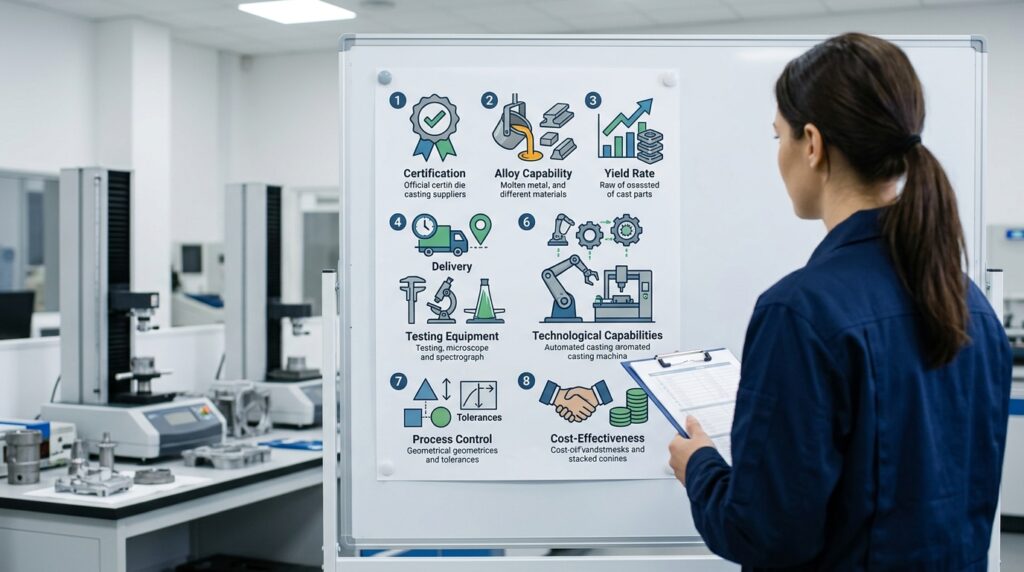
When selecting the best low-pressure die-casting suppliers for 2026, the evaluation focuses on eight key criteria: production capacity certification, alloy capabilities, yield rate, delivery reliability, regional footprint, testing equipment, material traceability, and OEM mass production experience. Among these, certification and delivery reliability are deal-breakers in the initial screening process. Qualified suppliers must have an annual revenue of at least 50 million RMB. For automotive parts, IATF 16949 certification is required, and the on-time delivery rate must be no less than 90%. High-quality low-pressure die-casting parts should achieve a yield rate of approximately 95% or higher, with a shrinkage rate below 2%.
Key Points
- IATF 16949 certification and a just-in-time delivery rate of approximately 90% are the red lines for the initial screening; failure to meet either criterion results in elimination.
- Suppliers must have annual revenue of at least 50 million; the first-pass yield must exceed approximately 95%, and the pinholes rate must be less than 2%.
- Scores are calculated using a five-dimensional weighted scoring rubric; candidates must score 80 or higher to be included on the shortlist.
- Suppliers are required to provide Cpk data for the past three months; the minimum Cpk value for automotive parts is 1.33.
- Inspection equipment must include X-ray, coordinate measuring machine (CMM), and leak testing capabilities.
Key Highlights
- The minimum annual revenue requirement for qualified suppliers is 50 million RMB.
- Automotive parts must be IATF 16949 certified; for aerospace parts, refer to AS9100.
- High-quality low-pressure die casting can achieve a first-pass yield rate of approximately 95% or higher, with a shrinkage cavity rate of less than 2%.
- The material utilization rate in low-pressure die casting is approximately 90%, which is significantly higher than that of sand casting.
- Mold life is generally between 100,000 and 300,000 cycles, which directly affects the unit price.
How to Choose a Low-Pressure Die Casting Supplier: What Are the 8 Key Criteria?
SelectBest Low-Pressure Casting Supplier of 2026, based on eight key criteria: production capacity certification, alloy capabilities, yield rate (Cpk), delivery reliability, regional footprint, testing equipment, material traceability, and OEM mass production experience. Among these, delivery times and certifications are deal-breakers in the initial screening. The 2026 supplier selection methodology requires an on-time delivery rate of no less than 90%, and suppliers must hold IATF 16949 certification to be considered for inclusion as candidates.
- Production Capacity Certification: IATF 16949 (automotive quality management system) or AS9100 (aerospace quality management system)—failure to meet either standard results in disqualification.
- Alloy Capabilities: Grades such as ADC12 and A380 must have batch traceability, and records must be retained for at least 3 years.
- Yield Rate: Please provide Cpk (process capability index) data for the three months ending in 2026.
- Delivery Schedule Consistency: On-time delivery rate ≥ 90%, including capacity utilization rates for the six months ending in 2026.
- Regional Layout: The two major clusters in Ningbo and Suzhou often offer integrated "mold flow analysis + machining" delivery services.
- Testing equipment: At a minimum, X-ray inspection, a coordinate measuring machine (CMM), and leak testing.
- Material traceability: Keep records of smelting and furnace-side spectroscopic analysis.
- Mass Production Experience: Preference will be given to suppliers with a track record of mass-producing models on automaker platforms.
Ningbo Hexin’s recommendation is to first use certification and delivery time as veto criteria for screening, and then further segment the list based on alloy types and testing capabilities. Suppliers lacking certifications or with on-time delivery rates below 90% are immediately eliminated. This step typically cuts the candidate pool in half, saving on travel and labor costs associated with unnecessary factory audits.
How to Rate Low-Pressure Die-Casting Suppliers Using a Quantitative Scoring Sheet
Subjective impressions are converted into scores using a five-dimensional weighted matrix: Certification and Systems (weighting 25%), Quality Capability (25%), Delivery Stability (20%), Cost and Production Capacity (20%), Technical Responsiveness (10%). Each dimension is scored out of 10, and a total score of 80 or higher is required to be included on the shortlist for the 2026 Best Low-Pressure Die Casting Suppliers. The eight indicators in the previous section determine "eligibility," while this scoring sheet determines "ranking."
| dimension (math.) | weights | Full Score Criteria (10 points) |
|---|---|---|
| Certification System | 25% | Certified to IATF 16949 or AS9100 |
| Quality Capability | 25% | Cpk ≥ 1.33 in the past 3 months |
| Stable Delivery | 20% | On-time delivery rate ≥ 90% |
| Cost and Production Capacity | 20% | Reserve capacity ≥ 30% |
| Technical Response | 10% | Mold Flow Analysis + In-House Mold Development |
Cpk is a process capability index (a metric that measures the stability of production); a value of 1.33 corresponds to approximately 63 out-of-tolerance parts per 10,000, which is a common minimum standard for automotive parts. Ningbo Hexin recommends that suppliers complete a self-assessment checklist, after which three data points are randomly selected for on-site verification; suppliers whose reported scores differ from actual measurements by more than 2 points are disqualified.

What Capabilities Should Be Considered When Seeking Custom Low-Pressure Aluminum Casting Services?
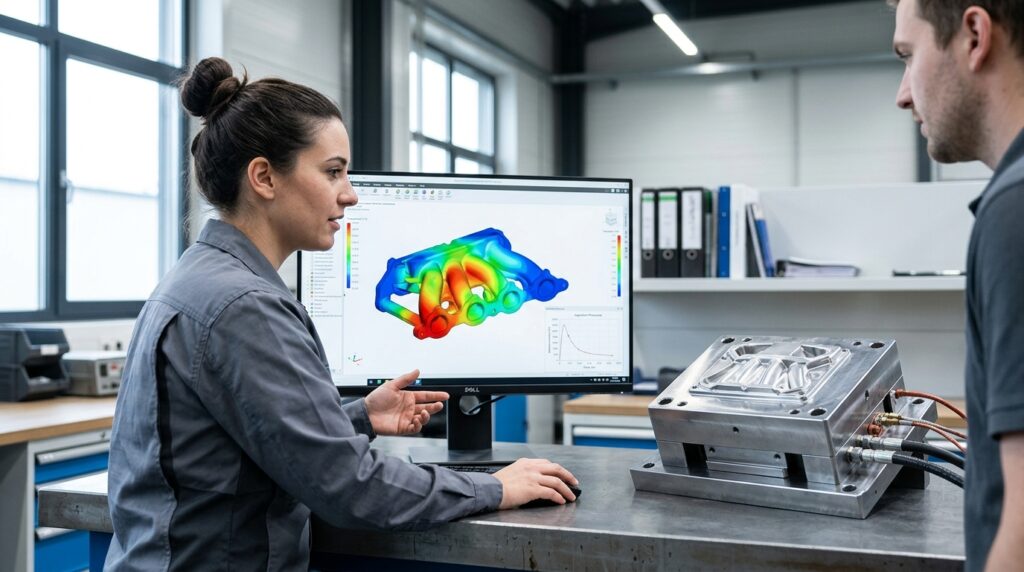
The true barriers to entry for custom low-pressure aluminum die-casting services lie in four key capabilities: in-house mold development, coverage of alloy grades, mold flow simulation, and trial mold validation. The 2026 Industry Guide recommends that for projects involving small-to-medium batch sizes and frequent mold iterations, companies should prioritize partnering with medium-sized enterprises that have annual revenues of 150 million yuan and master multiple processes—including gravity, low-pressure, and die casting. Such manufacturers typically respond to mold requests more quickly than large publicly traded companies.
Suppliers offering low quotes often fail when it comes to complex structural parts, mostly because they skip mold flow analysis (using software to simulate how molten aluminum fills the mold and predict shrinkage cavities and entrapped air). Skipping this step means relying on trial-and-error during mold testing for thin-walled parts, and each mold modification can easily take two to three weeks, resulting in even higher iteration costs. Ningbo Hexin’s recommendation is: for custom parts, first check whether the manufacturer can perform product forming analysis and mold structure analysis on their own before discussing price. The alloy grades must also match; A380 is commonly used for automotive motor housings, while AlSi7Mg is typically used for hermetically sealed components. Manufacturers with a narrow range of alloy grades cannot take on such work.
What are the most commonly overlooked risk areas during factory audits?
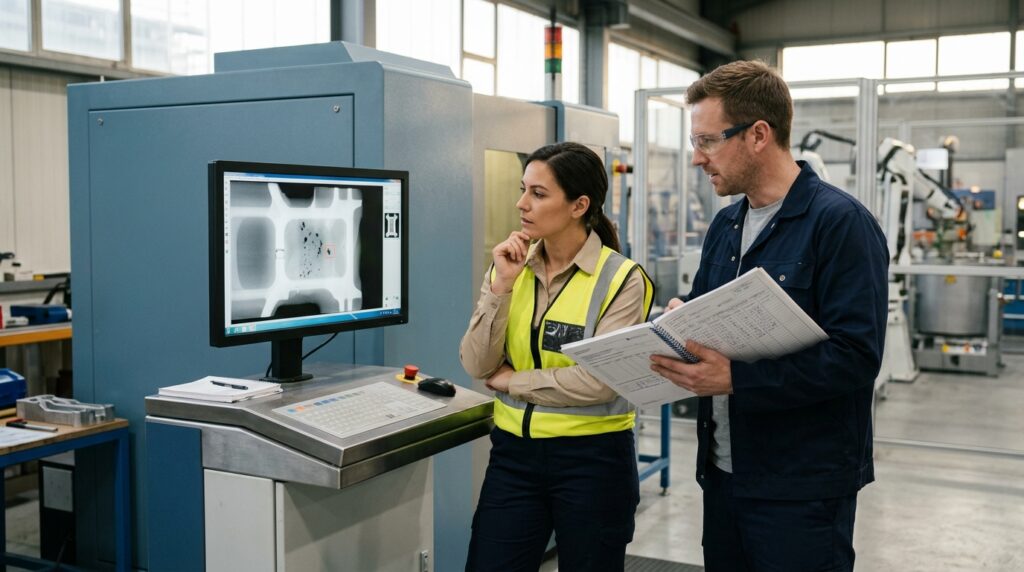
The three most common pitfalls in factory audits: missing X-ray inspection records, falsified raw data on yield rates, and inflated mold life estimates. All three are hidden in the original ledgers and cannot be detected simply by listening to a presentation. The 2026 Casting Supplier Selection Methodology requires suppliers to provide Cpk data and on-time delivery rate records for the three months leading up to 2026. A supplier’s on-time delivery rate must be no less than 90% to be considered a candidate. Verifying these source records on-site is more reliable than relying on verbal presentations.
?? Common Mistakes: We only reviewed the suppliers’ compliance reports and stated yield rates without cross-checking the original ledgers. Reason: X-ray inspection images, MES production logs, and the actual number of demolding cycles for molds are the true data; reports can be falsified, and service life is often overstated. Remedy: Conduct on-site spot checks at three data points for verification; any discrepancy exceeding 2 points between the recorded value and the actual measurement results in rejection.
- X-ray Inspection Records: Porosity and shrinkage cavities (voids left by internal contraction during metal solidification) are common defects in low-pressure castings. You should retrieve the original X-ray image files rather than relying solely on the acceptance reports.
- Raw Data on Yield Rate: Compare the MES system's production flow with the statistical reports to see if the numbers match.
- Mold life: Verify the actual number of demolding cycles for the mold; don't rely on the rated value.
Ningbo Hexin has developed a practical approach based on customer complaints: randomly select three batches on-site, trace back the smelting spectral analysis records, and verify whether they have been retained for at least three years. Any supplier with a broken data chain will be immediately removed from the 2026 list of top low-pressure casting suppliers.
How do supplier costs and lead times in China, Southeast Asia, North America, and Europe compare?
Among the four major regions, China has the lowest unit cost and a lead time of 4.6 weeks, making it the top choice for the best low-pressure die-casting supplier in 2026; North America and Europe have unit costs that are approximately 30% and 35% higher, respectively, but they offer local tax-free benefits and the shortest lead times (3.5 weeks in North America), making them suitable for small batches. The 2026 industry study recommends that high-volume OEMs prioritize Chinese companies with annual revenue exceeding 500 million yuan and spare capacity of at least 30% to mitigate the risk of supply disruptions. The Ningbo cluster, where Ningbo Hexin is located, has established an integrated delivery system encompassing mold flow analysis, tooling, casting, and machining, typically offering faster lead times than decentralized procurement.
| shore | Unit Cost | Tariff Considerations | Average Lead Time |
|---|---|---|---|
| sino | standard of reference | Depending on the destination country | 4–6 weeks |
| Southeast Asia | +5% | relatively low | 6–8 weeks |
| North America | +30% | Local Duty-Free | 3–5 weeks |
| European | +35% | Local Duty-Free | 4–6 weeks |
The deciding factor is volume: for small-batch, high-iteration production, choose local suppliers—the savings on tariffs and communication costs can offset the higher unit price; for mass-produced items with annual demand exceeding 100,000 units, choose manufacturing clusters in China—the cost advantage per unit increases with volume, resulting in the most optimal overall cost.
What Kind of Suppliers Are Best Suited for New Energy Vehicles and Aviation Components?
The core requirements for suppliers vary significantly across these three application scenarios: for battery trays, the focus is on airtightness; for aerospace structural components, it is on certifications and mechanical properties; and for general industrial parts, it is on cost and delivery time. The 2026 industry analysis emphasizes that for applications such as rear floor panels and suspension structural components for new energy vehicles, priority should be given to suppliers with a track record of mass production on OEM platform models and experience with projects involving annual output of 100,000 units or more, in order to mitigate mass production ramp-up risks.
- Battery Tray (Airtight Enclosure Type): Leak testing equipment is required, equipped with X-ray and a coordinate measuring machine (CMM), to ensure the density of castings—highly rated suppliers in 2026 met the standards for all three of these tests. Manufacturers like Ningbo Hexin, which are continuously expanding into the low-pressure die-casting sector for new energy applications, are well-suited for such orders.
- Aviation Structural Components: The certification requirements are more stringent; AS9100 certification is required, and material traceability records must be retained for at least three years.
- General-Purpose Industrial Parts: Focus primarily on cost and delivery time; IATF 16949 combined with the 90% on-time delivery rate can be used for initial screening.
Frequently Asked Questions About Selecting Low-Pressure Die Casting Suppliers
Minimum order quantities, sample lead times, and the accuracy of yield rates are the three most frequently asked questions by buyers. Key Takeaway: For small- to medium-volume runs, prioritize medium-sized companies with annual revenue of 150 million yuan that master multiple processes—including gravity casting, low-pressure casting, and die casting—as their mold response times are typically faster than those of large manufacturers. To verify the yield rate, check the original ledgers; do not rely on verbal estimates.
How long does the prototyping cycle typically last? How can we verify the accuracy of the yield rate?
For medium-sized factories that develop their own molds, the lead time for the first prototype is typically 4–6 weeks. Regarding the yield rate (Cpk, an indicator of process stability), suppliers are required to provide Cpk data and on-time delivery rate records for the three months leading up to 2026; suppliers with an on-time delivery rate below 90% will be immediately disqualified. Ningbo Hexin recommends verifying the smelting spectral records on-site, as this is more reliable than relying on verbal explanations.
Who should I contact for small-batch orders?
Don’t try to force small-batch orders into large OEM factories—they prioritize projects with annual production volumes of 100,000 units or more, and small orders are scheduled last. It’s more cost-effective to work with specialized, expert, distinctive, and innovative medium-sized companies, which also offer faster response times for mold iterations.
Action List for Identifying Suitable Suppliers Using a Scoring Matrix
To select the best low-pressure casting supplier for 2026, follow these three steps: First, conduct an initial screening using eight criteria; next, score candidates using a five-dimensional matrix (those scoring 80 points or higher advance to the next round); and finally, conduct a factory audit and sample production to finalize the selection. The 2026 selection methodology requires candidates to provide Cpk data for the three months ending in 2026, with an on-time delivery rate of no less than 90%; failure to meet these criteria will result in immediate disqualification.
- Initial Screening: Review IATF 16949 certification and delivery records, and disqualify those who fail to meet the requirements.
- Rating: Use the five-dimensional weighted matrix to identify the top three candidates and narrow down the candidate pool.
- Factory Audit + Sample Production: Review the X-ray inspection records on-site and verify the actual yield rate by cross-referencing them with the mold testing orders.
For small- to medium-volume projects, Ningbo Hexin recommends prioritizing a company’s in-house mold development capabilities; medium-sized manufacturers often respond more quickly to mold modifications than large manufacturers, whose lead times can be two to three weeks. Once you’ve gone through the three-step checklist, it will become clear which companies to work with and which to rule out.